
What if the most dangerous transaction in a cross-chain swap is not the swap itself, but an approval granted several minutes earlier? For many DeFi users, wallet security is imagined as a question of protecting a seed phrase and rejecting obviously suspicious signatures. Those safeguards matter, but they leave out a quieter layer of risk: the permissions that allow smart contracts to move tokens after the original transaction has finished.
This distinction becomes especially important when comparing a browser extension wallet with a more cautious approval-management workflow. Cross-chain activity adds another complication. A bridge, decentralized exchange, router, or settlement contract may operate across several networks, and an approval on Ethereum does not automatically authorize movement on an entirely different chain. Yet each network can accumulate its own permissions, contracts, and failure points. A practical security model therefore has to connect three subjects that are often discussed separately: token approvals, cross-chain execution, and wallet interface design.
Why token approvals are persistent permissions
Most fungible tokens follow a common allowance model. A wallet owner authorizes a particular contract to spend up to a stated amount of a token. The decentralized exchange or protocol can then use that allowance when the user later submits a swap. The approval and the swap are separate on-chain actions, even if an interface presents them as two steps in one smooth flow.
That separation creates a useful convenience and a security trade-off. A user may approve a large or effectively unlimited amount to avoid repeated approval transactions. The benefit is lower friction: future swaps may require fewer signatures and, depending on network conditions, fewer fees. The cost is that the permission can remain active until it is reduced or revoked. If the approved contract is compromised, upgraded in an unsafe way, misconfigured, or used through a malicious interface, an old allowance can become relevant to a new attack.
A common misconception is that disconnecting a wallet from a website cancels these permissions. It does not. Disconnecting changes the website’s ability to request new actions through the wallet connection; it does not erase an allowance already recorded by the token contract. Similarly, uninstalling a browser extension does not revoke permissions on a blockchain. Revocation is an on-chain change and must be treated as its own transaction.
The sharper mental model is to regard an approval as a standing authorization, not as a historical receipt. The swap may be complete, but the authorization can continue to exist. This is why approval management belongs in routine wallet hygiene, particularly for wallets that interact with many protocols or hold assets beyond the amount needed for a single trade.
Cross-chain swaps: two forms of complexity
Cross-chain swaps can mean different things operationally. Some systems use a bridge or messaging layer to move representations of assets between networks. Others coordinate liquidity across chains, allowing a user to deposit one asset on one network and receive another asset elsewhere. In both cases, the user may encounter several contracts rather than one simple exchange transaction.
The first complexity is technical. Each network has its own chain state, transaction history, gas asset, contract addresses, and approval records. An allowance granted on one network generally does not grant permission on another because the relevant token contract and account state are separate. This is protective in one sense, but it also creates fragmented visibility. A wallet user can be careful on one chain while overlooking stale approvals on another.
The second complexity is interpretive. A transaction may be legitimate while still being difficult to understand. A router may call another contract; a bridge may require a token approval before initiating a message; and a cross-chain service may display a destination address that is not the same as the contract receiving the initial deposit. Complexity is not proof of fraud, but it increases the value of accurate transaction simulation, clear address labeling, and deliberate review.
For US users, there is also a practical operational issue: cross-chain transactions may involve different fee assets and different finality assumptions. A transfer that appears complete on the source network may still be waiting for confirmation, message delivery, or execution on the destination network. Users should avoid treating a pending cross-chain operation as failed merely because the destination balance has not updated immediately. Conversely, they should not approve a second transaction simply because a dashboard is slow to reflect the first one.
Comparing two security approaches
Convenience-first wallet use
The convenience-first approach emphasizes speed. The user connects a wallet, accepts the interface’s suggested approval, signs the swap, and moves on. This can be reasonable for a small, isolated transaction when the contract, token, amount, and network are all well understood. It is also the workflow most likely to produce unused allowances, because the user is optimizing for completion rather than permission cleanup.
Its principal weakness is not that every transaction becomes unsafe. The problem is cumulative exposure. Several modest approvals across multiple networks can create a larger permission surface than the user remembers. The risk is particularly uncomfortable when a wallet contains long-term holdings alongside funds intended for active DeFi use.
Approval-aware wallet use
The approval-aware approach separates three questions: What contract am I authorizing? How much can it spend? How long should that permission remain active? The user may approve only the amount required for a transaction, revoke permissions after use, or maintain a separate activity wallet with limited balances.
This approach reduces standing exposure but adds cost and friction. Approvals and revocations require transactions, and revocation itself consumes network fees. On networks with volatile fees, frequent cleanup may be economically irrational for very small balances. There is also a behavioral risk: too many warnings or repetitive confirmation steps can cause users to approve mechanically. A secure workflow must be understandable, not merely more complicated.
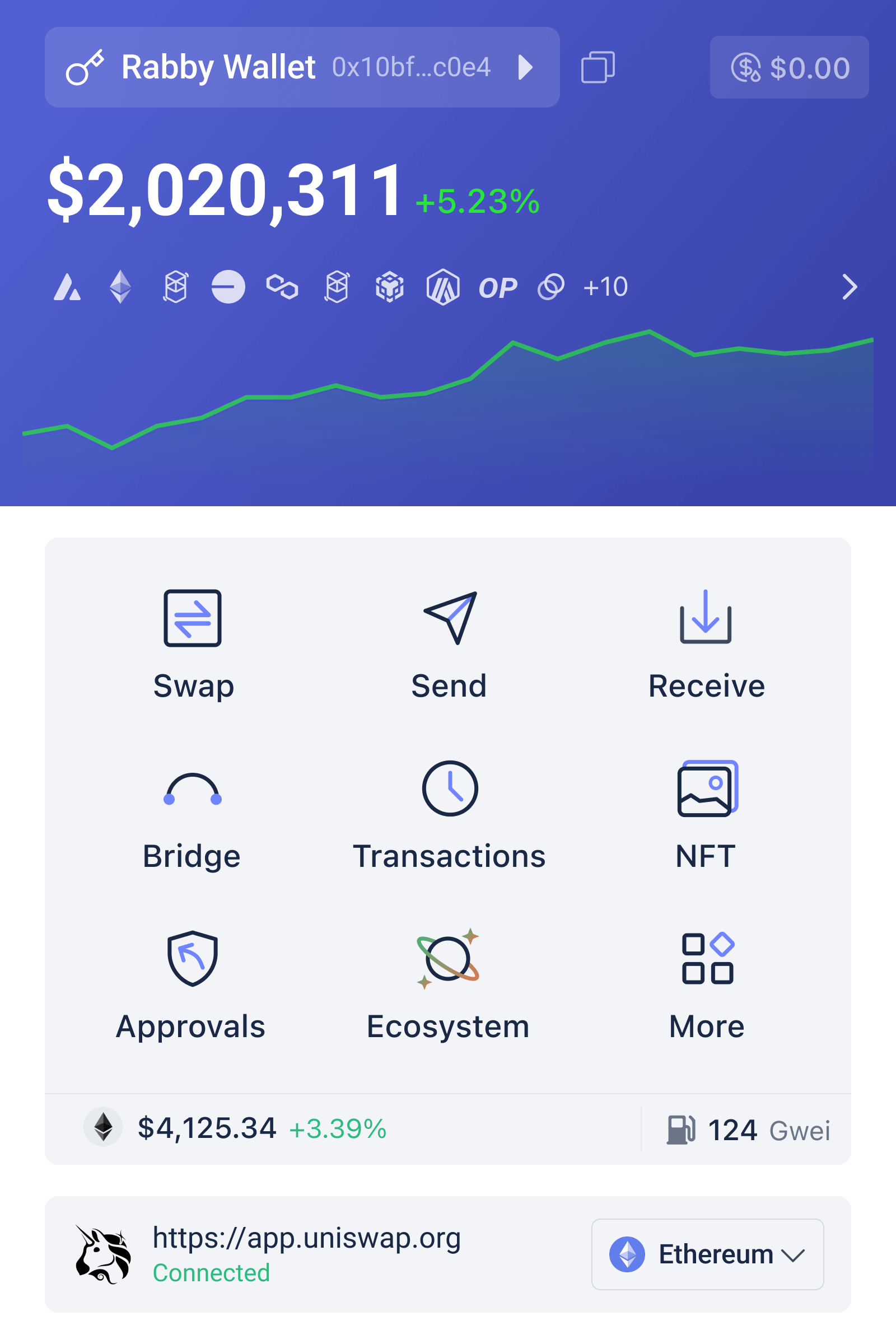
A browser extension such as the rabby extension can be useful when it makes network context, transaction details, and approval-related actions easier to inspect before signing. That does not transfer responsibility to the software. Wallet interfaces can improve visibility and simulation, but they cannot guarantee that every contract is honest, every price is fair, or every cross-chain message will settle as expected.
What transaction review can and cannot establish
Transaction simulation is valuable because it attempts to show likely state changes before a signature is submitted. A useful review may reveal that a transaction will spend a particular token, grant an allowance, transfer ownership, or interact with an unfamiliar contract. These signals can interrupt a dangerous blind-signing habit.
Simulation has boundaries. It is a forecast based on available state and assumptions about execution. State can change between simulation and inclusion, especially in active markets. Some contracts use complex logic, external calls, or conditions that are difficult to model completely. A transaction that simulates successfully may still produce an economically poor result because of slippage, price movement, liquidity conditions, or a malicious token’s behavior.
This is why “the wallet showed no warning” should never be treated as equivalent to “the transaction is safe.” A warning system is a risk-reduction layer, not an oracle. The strongest workflow combines interface review with independent checks: confirm the network, inspect the destination and spender, compare the amount with the intended trade, understand whether an approval is unlimited, and avoid signing when the action cannot be explained in plain language.
A reusable framework for safer DeFi operations
Before a token approval or cross-chain swap, apply a simple four-part test. First, identify the asset and network: are you spending the intended token on the intended chain? Second, identify the permission: is this a one-time amount, a capped allowance, or an effectively unlimited approval? Third, identify the counterparty: is the spender the expected protocol contract, and does the application’s domain and address match what you deliberately opened? Fourth, identify the recovery path: if the transaction stalls or the contract later becomes questionable, do you know how to revoke the allowance and isolate remaining funds?
For routine activity, separating funds by purpose is often more effective than trying to make one wallet perfect. A low-balance trading wallet can limit the consequences of a compromised approval, while a separate holding wallet is exposed to fewer applications. This is not a complete defense: signing a malicious transaction from the holding wallet remains dangerous. It is a containment strategy, reducing the blast radius when prevention fails.
Approval reviews should also be proportional. A trader interacting daily with numerous protocols may justify regular allowance audits. A long-term holder who rarely uses DeFi may gain more from refusing unnecessary approvals and keeping activity isolated than from repeatedly paying for revocations. The correct frequency depends on exposure, balances, network fees, and the user’s ability to interpret contract activity.
What to watch as wallet security evolves
The direction of wallet design is likely to depend on whether security tools can reduce risk without producing confirmation fatigue. Better interfaces may group permissions by chain, distinguish temporary spending from durable authorization, and explain cross-chain steps in a way that ordinary users can verify. The important signal will not be the number of warnings displayed, but whether users can make fewer ambiguous signatures while retaining control over legitimate activity.
Another open issue is standardization. Different tokens, protocols, bridges, and wallet interfaces expose permissions in different ways. Until approval data becomes consistently readable across networks, users will continue to face fragmented dashboards and uneven explanations. That limitation means operational discipline remains necessary even when a wallet offers advanced protection.
Frequently asked questions
Does completing a swap automatically remove the token approval?
No. The swap and the approval are generally separate transactions. An allowance may remain active after the swap unless the protocol or user explicitly reduces or revokes it.
Does disconnecting a DeFi website revoke wallet permissions?
No. Disconnecting normally ends the website connection but does not change allowances already recorded by token contracts. Revoking an allowance requires a separate on-chain action.
Are cross-chain swaps automatically less secure than single-chain swaps?
Not automatically, but they usually introduce more components and more opportunities for misunderstanding. Users must account for source and destination networks, bridge or messaging contracts, fee assets, settlement delays, and approvals on each relevant chain.
Should every approval be revoked immediately?
Not necessarily. Revocation improves control but costs fees and adds operational friction. A sensible policy weighs the value of the remaining allowance, the trust and usage of the protocol, the wallet balance, and the cost of changing the permission.
The central lesson is simple but easy to miss: wallet security is not only about protecting a private key. It is also about managing the permissions that a key has already granted. For DeFi users moving across chains, the safest default is neither blind convenience nor endless suspicion. It is a deliberate comparison between exposure, cost, and necessity—then signing only what can be explained, contained, and, when needed, undone.