
In DeFi, the most dangerous transaction is not always the one that visibly transfers funds. A routine token approval can create a longer-lived permission than the swap itself, while a cross-chain trade adds bridges, liquidity venues, and multiple networks to the same decision. That is the counterintuitive reality: convenience often increases the number of systems that must be trusted, even when the user sees only one “Swap” button.
For US users managing assets across Ethereum-compatible networks and other chains, wallet security therefore depends less on memorizing isolated warnings than on understanding transaction authority. Cross-chain swaps, unlimited token approvals, and wallet interfaces are connected parts of one risk model. The right question is not simply whether a wallet can complete a transaction, but what permission it grants, where that permission remains active, and which intermediary can interrupt or alter the intended route.
Three ways to move assets across chains
A cross-chain swap can mean several different things. The distinctions matter because the security assumptions are not interchangeable. Consider three common approaches: a centralized exchange, a bridge followed by a decentralized exchange, and an intent-based or aggregator-assisted route that selects venues on the user’s behalf.
Centralized exchange: operational simplicity, custodial exposure
A centralized exchange can be the simplest route. The user deposits an asset, trades it internally, and withdraws a token on the destination network. The exchange handles much of the routing and network coordination. This reduces the number of on-chain approvals and contract interactions visible to the user.
The trade-off is custody. During the process, the user relies on the exchange to hold funds, process withdrawals correctly, maintain access, and support the selected network. The risk has moved rather than disappeared. Instead of primarily evaluating smart contracts and wallet permissions, the user evaluates institutional controls, account security, withdrawal policies, and operational reliability.
Bridge plus decentralized exchange: self-custody with more moving parts
In a self-custodial route, a user may approve a token, send it to a bridge contract, receive a representation or native asset on another chain, and then swap through a decentralized exchange. This preserves direct control of the wallet, but the transaction path may involve several contracts and at least two networks.
The bridge is especially important because it often coordinates value across environments that do not share one common state. Depending on the design, it may use validators, an external messaging system, locked collateral, liquidity pools, or a combination of mechanisms. A bridge failure can therefore be different from a normal exchange failure: the destination token may depend on the bridge’s ability to maintain its backing or messaging assumptions.
Aggregators and intent-based routes: better execution, delegated complexity
An aggregator compares liquidity sources or constructs a route through several protocols. An intent-based system may let the user specify an outcome while a solver or intermediary searches for execution. These designs can reduce price impact or improve convenience, but they also make the path less obvious. The user may approve one contract while the final execution relies on additional settlement logic.
That does not make aggregators inherently unsafe. It means their value should be judged alongside transparency and permission scope. Better price execution is not automatically better risk-adjusted execution. A route that saves a small amount of slippage may not be attractive if it adds an unfamiliar contract, a broad approval, or a bridge dependency that the user cannot explain.
Why token approvals deserve separate attention
On many smart-contract networks, a token balance is controlled by a token contract, while a decentralized exchange or bridge uses an allowance to spend tokens on the user’s behalf. An approval is therefore not the swap. It is a permission that enables a later contract call to transfer up to a specified amount.
This distinction corrects a common misconception: confirming a successful swap does not necessarily revoke the approval used to perform it. If the allowance remains, the approved spender may be able to transfer tokens later, subject to the token contract’s rules and the allowance amount. The risk is most serious when the approved contract is compromised, malicious, incorrectly identified, or interacting with a vulnerable protocol.
There are two broad approval choices. A limited approval authorizes only the amount required for the current action. An unlimited approval authorizes a very large amount, often to avoid repeating the approval step. Limited approvals reduce the potential loss from a compromised spender, but they add transaction cost, delay, and friction. Unlimited approvals are convenient and may be reasonable for a highly trusted, frequently used protocol, yet they create a larger residual permission.
The relevant principle is least privilege: give a contract no more authority than the task requires. This is not an absolute rule. A user who makes frequent small trades may rationally value fewer approval transactions, while a user handling a substantial balance may prefer tighter limits even when fees are higher. The decision depends on asset value, protocol familiarity, chain fees, expected usage, and the user’s ability to monitor and revoke permissions.
Wallet security is a transaction-review problem
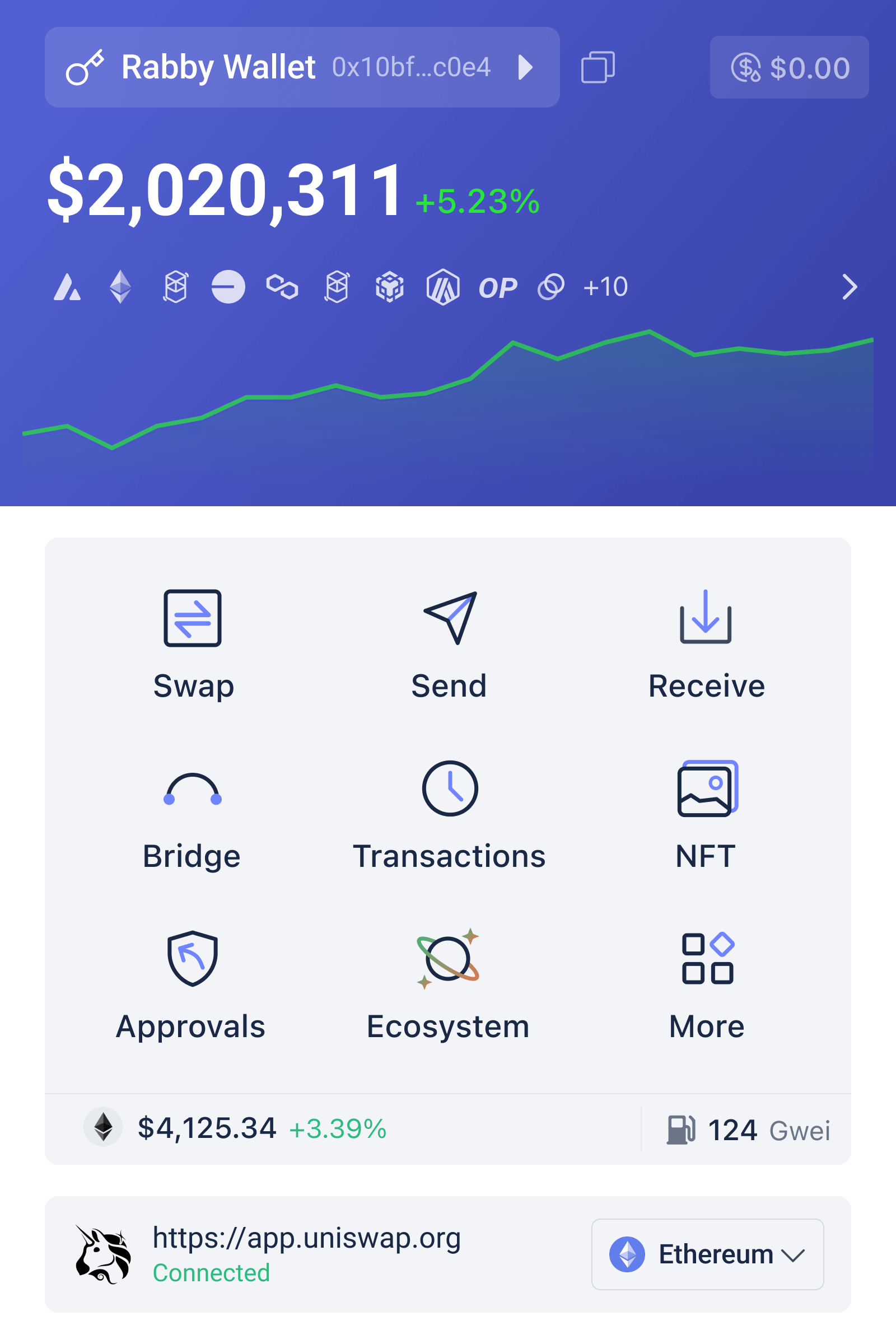
A secure wallet cannot make an unsafe protocol safe, and a cautious user can still be exposed by a compromised website or misleading transaction. The wallet’s most useful role is to improve the quality of the user’s decision before signing. That includes identifying the network, displaying the asset and spender, warning about suspicious contracts where possible, and separating ordinary transfers from approvals or contract interactions.
For users who plan to install a browser wallet, the source of the installation matters as much as the wallet’s interface. Use the rabby extension download path to locate the extension, then verify that the browser installation, permissions, and account setup match the intended product. A counterfeit extension can imitate familiar branding while capturing recovery phrases or signing data. No transaction-review feature can compensate for a stolen private key.
Before approving a cross-chain swap, inspect four questions. Which chain is the wallet currently using? Which token contract is being authorized? Which spender receives the allowance? What happens if the route fails after the approval succeeds? The last question is frequently neglected. Approval and execution can be separate transactions, so a user may approve a contract and then reject or abandon the subsequent swap. That unused permission can remain active.
Hardware wallets and separate accounts can reduce certain risks, but they do not eliminate authorization risk. A hardware device helps protect the signing key; it does not guarantee that the transaction being signed is economically sensible or that a spender is trustworthy. A practical structure is to keep long-term holdings in a low-activity account and use a separate account for experimental protocols, bridges, and unfamiliar applications.
A practical comparison of security trade-offs
For routine activity, a centralized exchange generally offers the fewest on-chain decisions but introduces custodial and account-access risk. A direct decentralized exchange on one chain preserves self-custody and may be easier to reason about, but it cannot solve the problem of moving value to another network. A bridge-plus-swap route provides broad access while exposing the user to bridge design, token representation, approvals, and multiple failure points. An aggregator may improve execution but can make the route harder to audit manually.
One useful framework is to evaluate a route on four dimensions: custody, permission, dependency, and reversibility. Custody asks who controls the funds during execution. Permission asks which contracts can move tokens and for how much. Dependency asks how many external systems must work correctly. Reversibility asks whether a mistaken or failed action can be undone. Cross-chain transfers often score poorly on reversibility: once an asset has been bridged or swapped, recovery may depend on support teams, bridge operators, or market liquidity.
Transaction simulation can help reveal expected balance changes and contract behavior, but it is not proof of safety. Simulations depend on the state and assumptions available at the time they run. A contract can behave differently under changing market conditions, and a benign-looking result does not establish that the protocol will remain secure. Warnings should be treated as evidence to investigate, not as a substitute for judgment.
What to watch as cross-chain systems mature
The likely direction of wallet design is toward clearer transaction intent: showing not only raw contract data, but also the assets leaving, the assets arriving, the spender being authorized, and the duration or size of the permission. If those interfaces become reliable, they could reduce errors caused by signing opaque calls. The unresolved issue is interpretation. A wallet can explain what a transaction intends to do, but it may not be able to verify every economic assumption or future behavior of a contract.
Users should also watch whether protocols adopt more granular approvals, temporary permissions, or account-abstraction mechanisms. These approaches could reduce standing allowances, but they may introduce new contracts and new trust assumptions. The security outcome will depend on implementation, governance, upgrade controls, and how clearly the wallet communicates the resulting authority.
The most durable habit is simple: treat every approval as a security decision, not as a harmless preliminary click. Choose the route that matches the value at risk, limit permissions when practical, separate experimental activity from long-term holdings, and verify the network and contract before signing. Cross-chain convenience is useful, but it is never free; its real cost is the additional trust and complexity hidden behind a single transaction flow.
Frequently asked questions
Is a token approval the same as sending tokens?
No. An approval grants a specified contract permission to spend a token up to an allowance. The later transfer may occur through a separate swap, bridge, or protocol transaction. If the allowance is not reduced or revoked, it may remain available after the original activity ends.
Are limited approvals always safer than unlimited approvals?
They usually reduce the maximum exposure to a compromised spender, but they are not a complete safety guarantee. The approved contract can still misuse the authorized amount, and the user may approve the wrong address. Limited approvals also require more transactions and may cost more, so the appropriate choice depends on the balance, protocol, chain fees, and expected use.
Does using a hardware wallet make cross-chain swaps safe?
A hardware wallet can protect the private key from many software-based attacks, but it cannot determine whether a bridge, spender, route, or token contract is trustworthy. Users still need to inspect transaction details, network selection, approval scope, and the possibility that a failed cross-chain operation may be difficult to reverse.